
We spoke with Assistant Prof. Aslı Zuluğ and Prof. Evren Balta, the inaugural recipients of Özyeğin University’s Impact Award, to explore how they create impact within their respective disciplines, united by a shared vision.
Assistant Prof. Aslı Zuluğ reflects on her journey from the laboratory to the classroom and from academia to industry, revealing how academic knowledge can evolve into new ventures, tangible products, and lasting social impact. Prof. Evren Balta, drawing on the perspectives of political science and international relations, sheds light on how academia can engage with public debate, policymaking, and broader society.
We invite you to explore the full stories of these two inspiring academics, whose work expands the boundaries of academia with an unwavering commitment to Özyeğin University’s vision of becoming an “Entrepreneurial Research University with High Global Impact.”
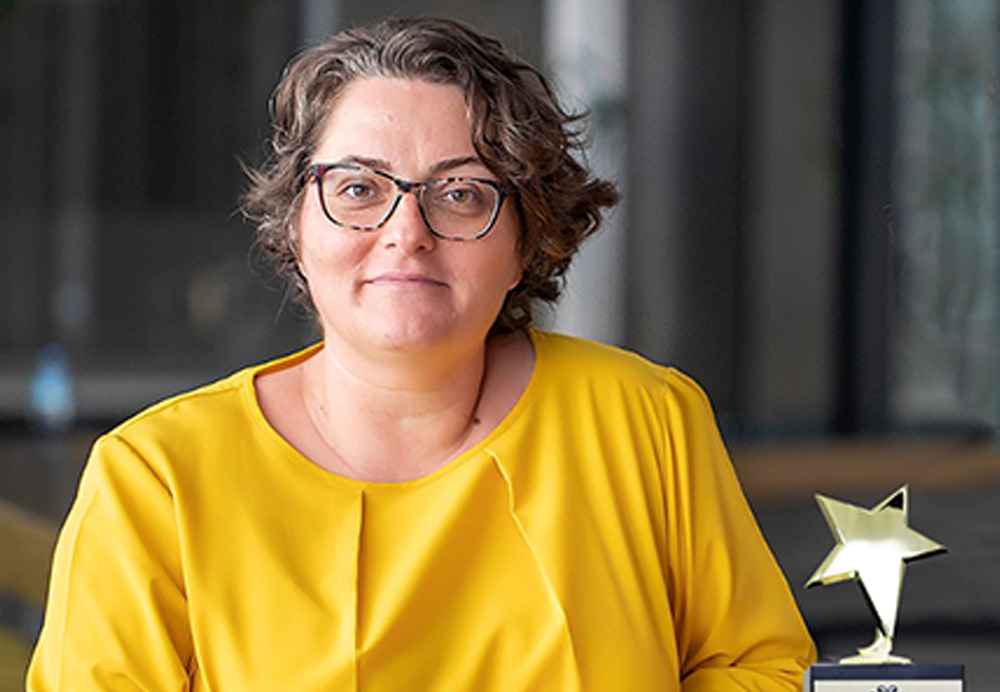
Aslı Zuluğ: Receiving the Impact Award is deeply meaningful to me, as it brings into view a journey where academic production, industry collaboration, entrepreneurship, and the student experience converge into a living, interconnected whole. At the heart of my work lies a cyclical model of impact, in which knowledge flows from the laboratory to the classroom, from the classroom to industry, and from industry to society. The award serves as a powerful representation of a multi-layered impact, spanning the translation of TÜBİTAK projects initiated with students into market-ready products; collaborative research conducted with industry partners; the transformation of industry-supported R&D projects into educational environments; the incorporation of entrepreneurial processes into coursework; an exemplary entrepreneurial success story that inspires young people; and collaborations that give rise to European Union projects and diverse funding mechanisms.
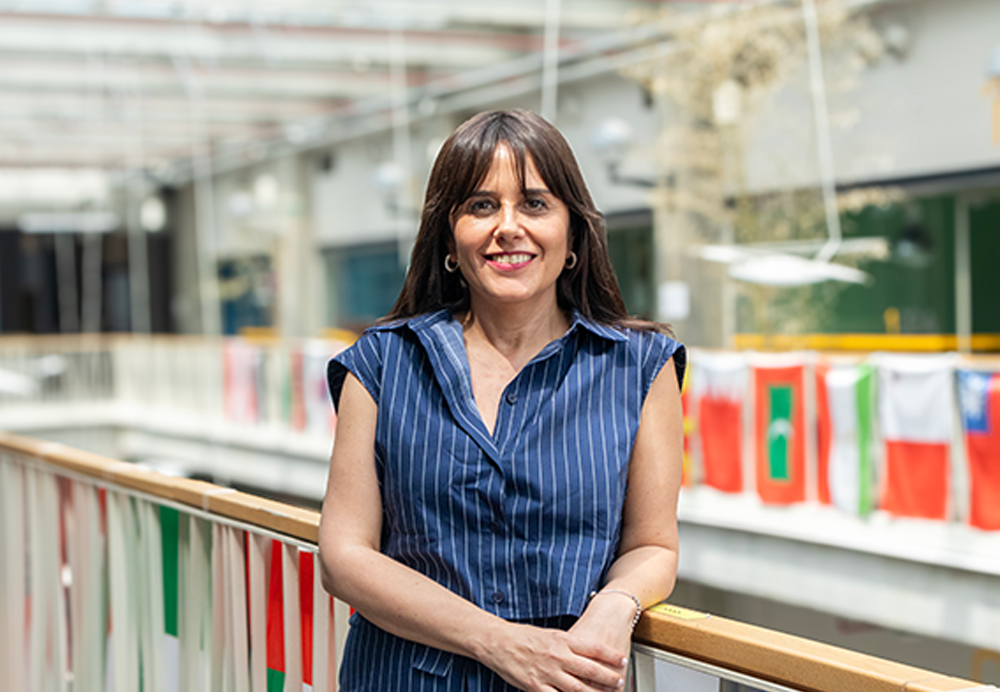
Evren Balta: Receiving Özyeğin University’s inaugural “Impact Award” is meaningful to me in two key ways. First, OzU’s emphasis on “impact” has long intersected with my own line of research. I study issues such as war, security, authoritarianism, migration, citizenship, and Türkiye–West relations, not merely as theoretical interests but with the intention of contributing to political debate in Türkiye and across the globe. Second, this award demonstrates that the body of work I have produced through policy briefs, reports, media contributions, and teaching resonates within Özyeğin University. In academia, the focus is often placed on citation counts and journal rankings. The Impact Award is especially significant because it adds the critical dimension of “social impact” to this picture.
A.Z: A model of academia that does not engage with society is no longer sustainable. Academic production centered on social impact goes beyond preserving knowledge; it is about transforming and sharing it. This perspective introduces young people to real-world challenges at an earlier stage, forges a strong connection across the university–industry–society triangle, encourages academia to act as a problem-solving agent, generates economic and social impact through projects that translate into tangible products, and strengthens students’ career journeys through concrete, hands-on experience. In short, social impact lies at the very heart of transformative academia.
E.B: Academic production focused on social impact is not a luxury; it is a necessity, especially in the time we live in. Distrust in knowledge, polarization, and conspiracy narratives are gaining ground both in Türkiye and around the world. In such an environment, an academia that speaks only to itself, repeating and reproducing itself in its own language within closed circles, represents a serious loss. A transformative vision of academia requires viewing knowledge not as an abstract “truth,” but as a process capable of reshaping institutions, everyday life, and political choices. This, in turn, calls for simplifying language while preserving methodological rigor, and for offering the world a “good line,” that is, a clear and principled stance on issues of inequality, justice, democracy, and peace.
A.Z: I see the transfer of knowledge to society as a cyclical, multi-stakeholder process built on three core pillars. The first is scientific production that begins with students and evolves into tangible products. The origin story of PACHA is a strong example of this. An idea that originated from students as part of a TÜBİTAK project evolved through laboratory research and industry collaborations into a venture that reached international markets, ultimately becoming an inspiring model for educational environments.
The second pillar is the generation of social impact through R&D projects carried out in collaboration with industry. Through these projects, students gain direct experience with real-world R&D processes, problem-solving approaches, sector dynamics, and interdisciplinary collaboration.
The third pillar lies in an educational approach that combines entrepreneurship with research. When these processes are integrated into coursework, students gain hands-on experience in how an idea is funded, commercialized, validated, and eventually evolves into a team-driven venture, enabling them to internalize knowledge through practice.
E.B: I consciously pursue a “multi-channel” approach to ensure that academic knowledge reaches society. Peer-reviewed articles and books form the backbone of my work; yet, if knowledge remains confined to these sources alone, it often circulates within a very limited circle. That is why I write books in Turkish. I have authored textbooks. I use the essay form. I write columns and analyses for newspapers and magazines. I prepare policy briefs and reports in collaboration with think tanks. I join television programs, podcasts, and public forums. I design my courses not merely around exams, but to immerse students in the pulse of current debates. In short, I aim to translate academic production into different formats. I do not hesitate to revisit the same concept in academic articles, conference talks, and pieces written for a broader readership.
A.Z: Almost none of my work can be performed within a single discipline. Food science, gastronomy, engineering, biotechnology, design, sustainability, business development, and entrepreneurship are all areas that I continually integrate into my work. An interdisciplinary approach leads to more robust R&D projects, allows for more innovative products and methods, encourages students to think holistically, and facilitates solutions that address the real needs of industry. That is why I position interdisciplinary collaboration as a fundamental prerequisite for creating impact.
E.B: Interdisciplinary collaboration plays a crucial role in my work. My academic background spans across political science, international relations, and sociology, which is inherently interdisciplinary. But in my projects, we go beyond that. When studying citizenship, migration, and nativism, collaboration with sociologists, psychologists, legal scholars, and data analysts yields results that are both more robust and richer in insight. In security and foreign policy research, I collaborate with historians, regional experts, and colleagues in economics. These collaborations not only deepen my understanding of the field but also create a more dynamic research environment for students.
A.Z: For me, the most meaningful project is the one that began as a TÜBİTAK project with students and eventually evolved into a startup, creating impact for both the economy and academia. PACHA Natural Collagen is a concrete example of this process. It tells the story of the student’s active role in scientific discovery, the effective use of funding, the commercialization of research, the transformation into a sustainable business model, and ultimately, the venture’s return to the university as a source of inspiration for others.
E.B: One of the most transformative projects for me was our long-term research on American passports and citizenship hierarchies in Türkiye. The book The American Passport in Turkey: National Citizenship in the Age of Transnationalism and subsequent articles clearly demonstrate that citizenship is not merely a legal status, but a package of privileges intertwined with class, spatial, and global inequalities. This work has gained recognition in the international literature and offered a fresh perspective on debates in Türkiye surrounding citizenship, migration, brain drain, and “dual citizenship.” In our more recent projects on anti-immigrant sentiment, I have also witnessed how field data can directly influence political debates and inform policy recommendations, further strengthening the tangible impact of our work. In Türkiye, I am widely recognized for my work on foreign policy and security. Many of my books in Turkish focus on security, war, and Türkiye’s foreign policy choices. Recently, my colleague Serhat Güvenç and I prepared a comprehensive textbook on Turkish foreign policy, which will soon be published. I believe this book brings together a wealth of knowledge that will serve as a valuable reference for both students and foreign policy practitioners alike.
E.B: Özyeğin University’s vision of becoming an “Entrepreneurial Research University with High Global Impact” aligns closely with my approach to research. The university encourages participation in international projects, visiting researcher programs, field research, and partnerships with policymakers. It provides a flexible environment for engaging students in research and preparing them for both academia and the world of politics. Additionally, the University recognizes and values outreach activities, media contributions, and collaborations with civil society organizations. This supportive climate allows academics to remain productive without being trapped in the “publish or perish” dilemma. Özyeğin’s environment empowers and emboldens me to design ambitious, high-impact projects.
E.B: Measuring and demonstrating impact is one of the hardest challenges in academia because social transformation is gradual. A single article or report rarely changes much. Knowledge accumulates over time, resulting in gradual shifts across multiple fields. These forms of impact are among the hardest to quantify. Another challenge is the tendency to reduce impact to numbers. Citations, downloads, and views are considered important indicators. Yet sometimes, a classroom discussion, a small report influencing a local government’s policy choice, or a project conducted with a civil society organization leaves a deeper mark than any quantitative metric. These forms of impact are often difficult to make visible. Thirdly, in a country like Türkiye, where polarization is high and mistrust of academia is sometimes openly expressed, it is challenging to distinguish between impact and reaction. Therefore, a project that is strongly criticized is, in fact, impactful. We must acknowledge that.
A.Z: What excites me most are projects that build stronger connections across academia, entrepreneurship, industry, and society. Over the coming days, I am particularly motivated to focus on student-centered innovation models, sustainability in food systems, functional food technologies, and multi-stakeholder structures that grow through European Union and TÜBİTAK projects. I am also deeply interested in developing new methodologies in food entrepreneurship and in strengthening the role of university laboratories as accelerators for projects that translate into real-world products. These areas have the potential to amplify not only academic impact but also economic and social impact.
E.B: The areas that excite me most moving forward can be grouped under several headings. First, I am interested in local openings, vulnerabilities, and emerging forms of intra-regime competition within authoritarian systems. Second, I am focusing on the intersections between citizenship hierarchies, talent programs, citizenship by investment, and migration regimes. This field offers a powerful lens for understanding both global inequalities and Türkiye’s domestic and foreign politics. Third, I am examining the relationship between migration and regime types. Finally, I am interested in how mid-sized countries, such as Türkiye, are repositioning themselves within the new global order across the dimensions of security, economy, and democracy. All of these areas directly engage with pressing social and political debates.
A.Z: The greatest significance of this award is that it represents far more than an individual achievement. What I witness every day at Özyeğin University is a community that is curious, courageous, unafraid to experiment, and committed to creating together. This is precisely where impact begins. To our students, early-career researchers, and colleagues, my message is simple: The value of an idea is measured by the determination to bring it to life. Sometimes a small project, a classroom discussion, a laboratory experiment, or a research question can grow in unexpected ways and transform into something that truly touches society. The greatest strength on this journey lies in sharing, collaborating, and learning from one another. I believe our university embodies this spirit, and together we are forging ahead to a future where we will create even greater impact.
E.B: As we mark this award, I would like to take this opportunity to share three thoughts with the university community. First, never assume that your work is “small.” A well-designed course, a carefully written thesis, a local research project, or an initiative with civil society can leave a far deeper mark than you might expect. Second, do not view academic rigor and social responsibility as alternatives to one another. When they move forward together, knowledge becomes more robust, and the relationship between academia and society grows more trustworthy. Third, it is essential to hold on to hope. The challenges facing both the world and our country are profound. Yet universities remain among the rare institutions where critical thinking, solidarity, and collective production are still possible. Making full use of this potential is in our hands.