
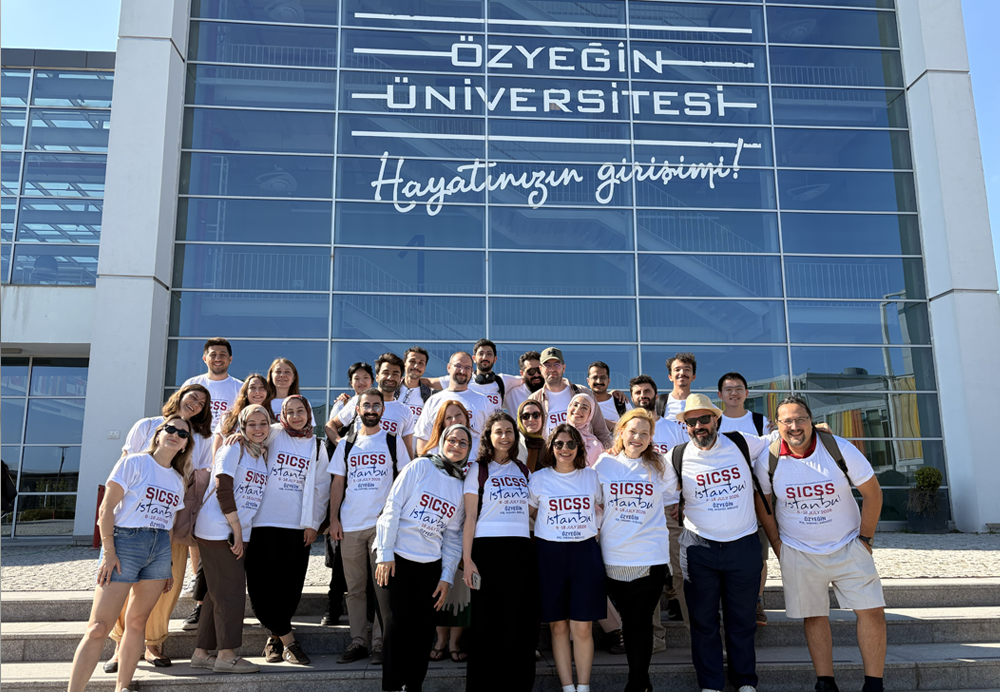
Özyeğin University’s vision of becoming an “Entrepreneurial Research University with High Global Impact” is deeply rooted in a commitment to transforming the knowledge generated on campus into lasting social impact that extends far beyond the campus. In this issue of Beyond Research, we spotlight one of the latest examples of this vision in action: SICSS Istanbul 2026.
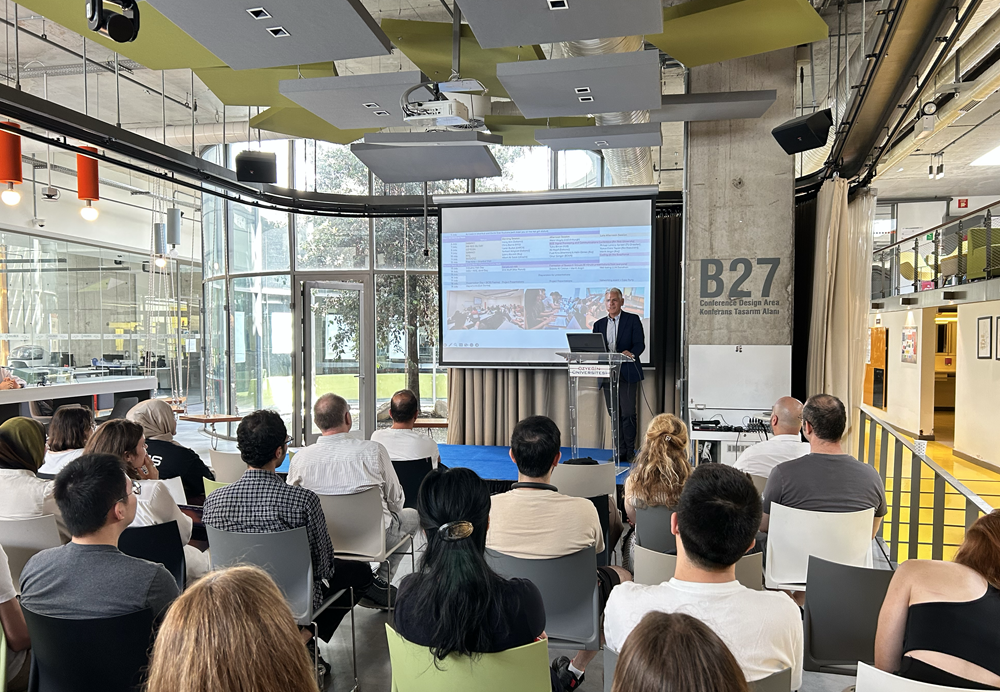
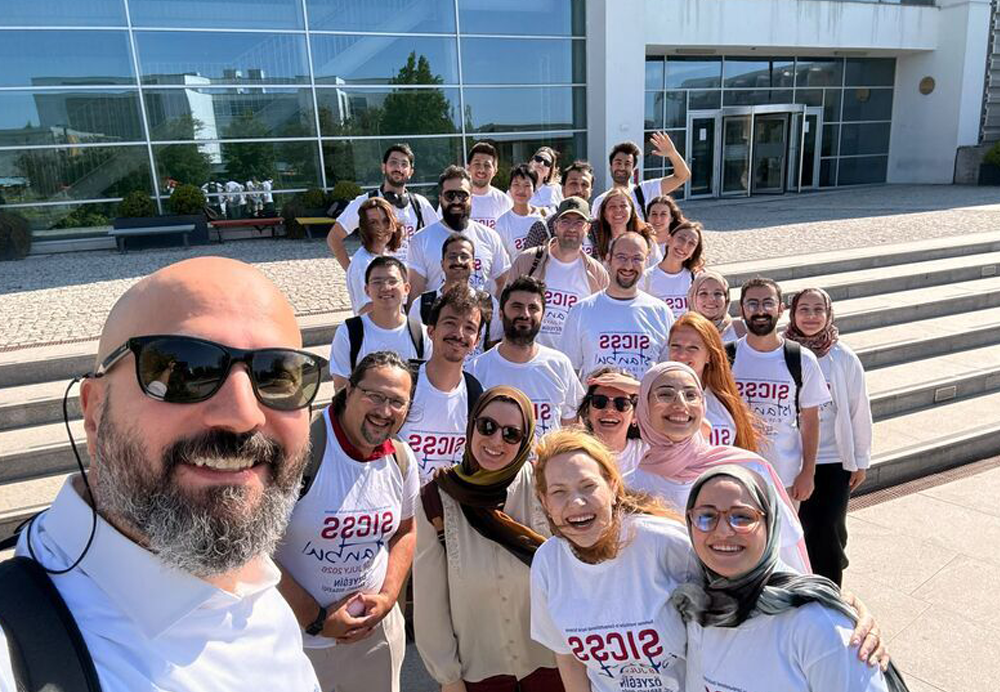
Hosted by Özyeğin University this year, the Istanbul program is part of the global Summer Institutes in Computational Social Science (SICSS) network, which has been bringing together researchers around the world since 2017. Held under the theme of “Social Science in the Age of Large Language Models,” the program convened 22 early-career researchers from diverse disciplines. Participants explored how large language models (LLMs) are employed in social sciences, the new research methods they offer, and the ethical and methodological challenges they raise.
We spoke with Assoc. Prof. H. Akın Ünver, faculty member at Özyeğin University and Coordinator of SICSS Istanbul, about how large language models are transforming social science research, the collaborative research ecosystem fostered by leading universities, and how scientific trust can be maintained in AI-assisted research.
It is no longer sufficient to think of large language models simply as analytical tools. They have evolved into a core interface that social scientists rely on throughout the research process, from writing code and analyzing text to cleaning data and designing studies. LLMs are not social actors in the human sense; they do not possess intentions or agency. However, because they influence how knowledge is produced, how people communicate, and how decisions are made, they are becoming an increasingly visible part of our social systems.
In the past, computational social sciences education would begin with programming before moving on to methods such as text analysis, network analysis, or machine learning. Today, researchers can access many of these methods directly through an LLM, significantly reducing the barriers to conducting computational research.
That said, a convincing response or functional piece of code does not necessarily mean the underlying result is scientifically sound. At SICSS Istanbul 2026, we therefore focused not only on how to use these models effectively but also on where they fall short, how to validate their outputs, and how to preserve the critical reasoning that lies at the heart of social science research.
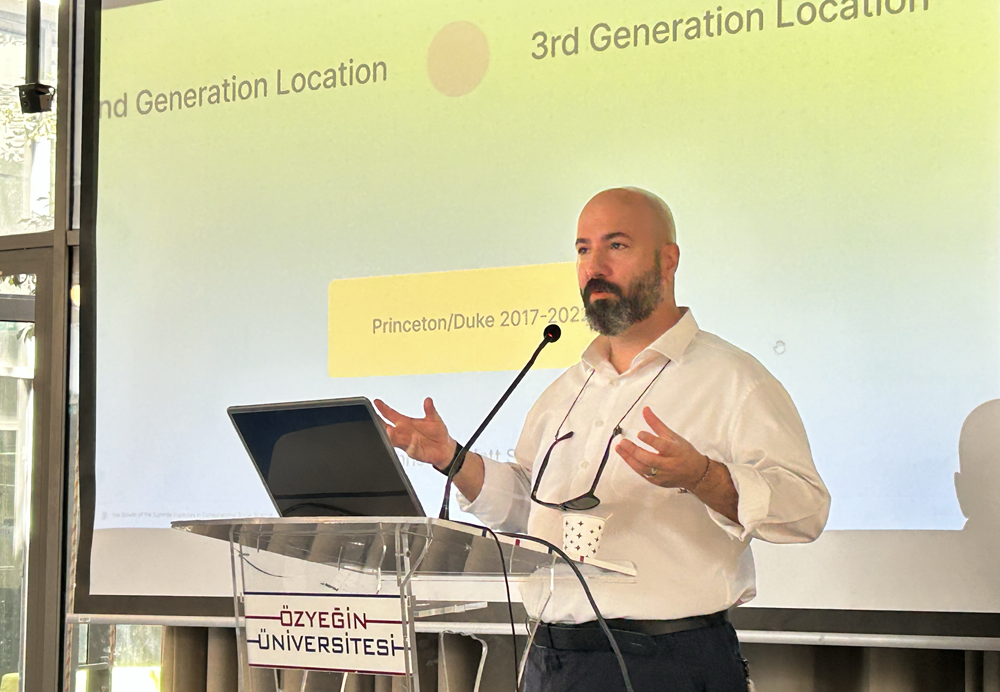
Computational social science is not a field that can flourish within the boundaries of a single discipline or university. It relies on continuous collaboration among computer science, political science, sociology, economics, psychology, communication, data science, and many other fields. That interdisciplinary spirit has been at the core of SICSS Istanbul from the very beginning.
From the outset, we envisioned SICSS Istanbul as much more than a summer program hosted by Özyeğin University. We see it as a shared platform that regularly brings together researchers working in computational social science across Türkiye and the broader region. When faculty members from different universities teach together, exchange methodologies, and collaborate with early-career researchers, they create a vibrant flow of knowledge that benefits the entire research community.
A sustainable research community is not built through a single event. It requires participants, instructors, and institutions to reconnect over time, develop joint research projects, and welcome new researchers into the network. That is why, the long-term vision for SICSS Istanbul is to cultivate lasting collaborations that extend well beyond the program itself and foster a dynamic, sustainable, and productive research ecosystem.
The impact of a summer program cannot be fully measured by a two-week course schedule alone. What truly matters is whether participants continue to build relationships with one another and with the program after it concludes. One of SICSS’s greatest strengths is the way these connections deepen over time.
It is particularly meaningful for us to see researchers who joined the program as participants in previous years return a few years later as instructors in their own areas of expertise. This demonstrates how SICSS has evolved from a program that simply transfers knowledge into a community that cultivates its own generation of researchers.
This cycle also serves as a powerful example for early-career researchers. They see not only seasoned scholars in the field but also researchers who were at a similar stage just a few years earlier and have since progressed in their own academic journeys. At the same time, experiences gained and research questions developed in previous cohorts are passed on to new participants. In this way, the program’s collective knowledge continues to grow and strengthen with each new generation.
LLMs can simulate, to a certain extent, the linguistic and behavioral patterns associated with specific social groups, demographic profiles, or political perspectives. This offers researchers the opportunity to test hypotheses, refine survey instruments, and explore potential outcomes of different scenarios before beginning fieldwork.
However, a synthetic public cannot replace a real public. A model’s prediction of how a particular group might think is fundamentally different from measuring the lived experiences and perspectives of actual individuals within that group. Models can also reproduce the limitations, biases, and representation gaps embedded in the data on which they are trained.
For this reason, at SICSS, we approached LLM-based simulations as a complementary stage in the research process rather than a substitute for field studies. In the future, researchers may first test certain assumptions in synthetic environments and then validate them through surveys, experiments, interviews, or real-world behavioral data. The true methodological innovation will lie in reliably integrating synthetic outputs with empirical field data.
In computational social science, many research questions today extend beyond the datasets generated within universities themselves. A significant share of large-scale data sources, including job postings, digital platforms, social media, and online behavioral data, is held by the private sector. For this reason, building a trust-based relationship between academia and industry is becoming increasingly important.
Engagements with organizations such as Kariyer.net allow participants to gain insight into real-world data challenges. There is a significant difference between working with research-ready, cleaned datasets in an academic setting and working with real-world datasets that contain millions of observations and come with challenges such as missing information, complexity, and ethical constraints.
These interactions remind us that the question is not only “Can we do it?” but also “Should we do it?”. Issues such as data privacy, algorithmic discrimination, representation challenges, and responsible AI can be addressed more effectively through open dialogue between academia and industry. In this way, researchers can produce studies that are technically robust, practically applicable, and attentive to their broader social implications.
This is one of the most important methodological challenges facing the social sciences in the age of LLMs. In traditional research, we expect other researchers to be able to reproduce an analysis once the underlying data, code, and methods are shared transparently. In LLM-based research, however, model versions may change, the same prompt may produce different outputs at different times, and the process through which a model arrives at a result may not always be fully visible.
Therefore, simply stating that “we used GPT” in a study is not sufficient. Researchers should clearly report which model and version were used, which prompts were provided, the temperature setting and other parameters, how many times outputs were generated, and the methods used to validate the results.
At SICSS Istanbul 2026, we asked participants not only to produce working results but also to document how they arrived at those results. Scientific trust depends less on how impressive a model’s outputs appear and more on how transparent, testable, and reproducible the research process is. This is the fundamental condition for transforming artificial intelligence into a reliable research infrastructure for the social sciences.