

For many years, care work and mental load have primarily been addressed within the context of gender equality. Today, however, they have emerged as strategic issues with far-reaching implications, spanning talent management, employee experience, organizational performance, and sustainable development. With this perspective, Özyeğin University approaches care work and mental load as a multidimensional field of research that calls for rigorous measurement, in-depth analysis of their impact on the business world, and the development of concrete policy recommendations.
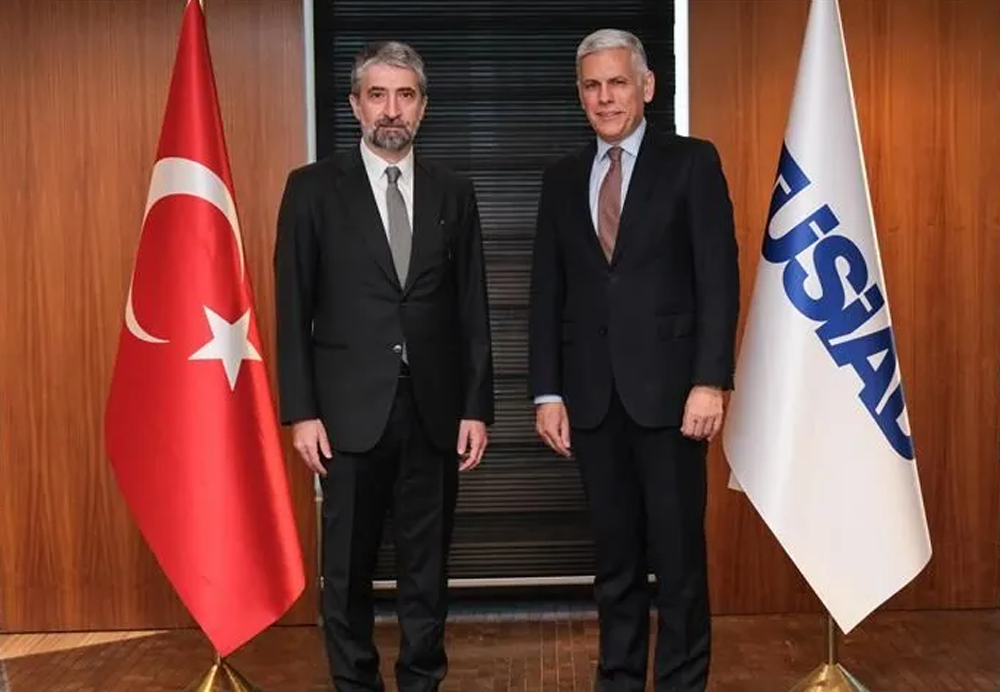
Launched in collaboration with Fiba Group, the #YükOlmasın (“#LetsNotMakeItABurden”) initiative has evolved beyond an awareness campaign into a comprehensive nationwide study examining how care work and mental load affect employees’ careers in Türkiye. Building on the study’s findings, the initiative has entered a new phase with the launch of the Care Equality Corporate Network, established under the leadership of Özyeğin University in collaboration with TÜSİAD. By bringing together the scientific knowledge generated by academia with the implementation capacity of the business community, the network aims to transform care equality into data-driven, sustainable corporate policies.
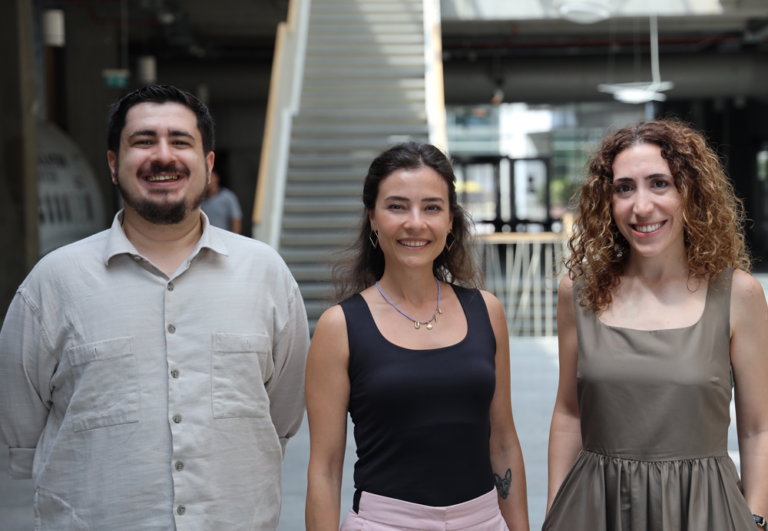
In this interview, we spoke with Dr. Ece Erbuğ, Assistant Professor in the Faculty of Business at Özyeğin University; Dr. Oğuz Can Ok, Gender Equality Specialist at Özyeğin University; and Dr. Gözde Çörekçioğlu İshakoğlu, Assistant Professor in the Department of Economics and Director of OzU WISE (Research Center for Work, Inclusion and Social Equity), about the impact of care work and mental load on employees and organizations, the origins of the #YükOlmasın initiative, the study’s key findings, and the contributions the Care Equality Corporate Network, launched in collaboration with TÜSİAD, can make to organizations and the broader business community.
Care work refers to the often unpaid and largely invisible activities that sustain the day-to-day functioning of a household and the well-being of those who live in them. We do not limit this concept to childcare alone. Preparing meals, doing laundry, grocery shopping, caring for pets, supporting an older or disabled family member, or providing care during periods of illness all fall within the scope of care work.
Mental load refers to the invisible, silent, yet deeply consuming cognitive dimension of this work. Who has a doctor’s appointment? What household items need to be replaced? When is a child’s school activity? Will an elderly family member’s medication last until the next prescription? It is the ongoing responsibility of planning, remembering, anticipating, monitoring, organizing, and making decisions. It begins long before any physical task is performed and never truly ends. The mind continues working in the background during meetings, while sleeping, and even on vacation.
The reason these concepts are receiving increasing attention today is very simple: this burden does not remain within the home. It extends into the workplace through its impact on employees’ energy, focus, motivation, and career decisions. Organizational indicators such as performance, absenteeism, and turnover represent only the visible tip of the iceberg. Beneath the surface lies an unmeasured accumulation of care work, mental load, and burnout. What cannot be measured cannot be managed, and what cannot be managed eventually manifests itself as talent loss for organizations.
The initiative originated from a simple observation. Care work and mental load are often responsibilities people carry without ever naming them. What remains unnamed stays invisible, what is invisible cannot be measured, and what cannot be measured cannot be managed. Since 2023, Özyeğin University and Fiba Group have been working together to make this “invisible” reality visible.
Right from the beginning, we identified a gap on two fronts. On the one hand, there is compelling evidence demonstrating the unequal distribution of care work. According to the International Labour Organization (ILO), women perform 76% of all unpaid care work worldwide. The Turkish Statistical Institute’s (TurkStat) Time Use Survey shows that employed women in Türkiye spend an average of 3 hours and 31 minutes each day on unpaid care work, while employed men spend only 46 minutes. Moreover, nearly everyone who remains outside the labor force due to household responsibilities is a woman.
On the other hand, one critical question remained unanswered: What is the cost of this inequality within the household for employers and the business world? In Türkiye, there has been very little systematic scientific research examining these costs. This represented not only a gap in the academic literature but also the absence of the required evidence that companies need to develop effective workplace policies.
With these observations in mind, we designed the research component of the #YükOlmasın initiative around three objectives: to make mental load visible as a measurable concept; to quantify its impact on employees’ career decisions; and, above all, to provide organizations with practical tools they can use rather than simply publishing another report that identifies the problem. Because raising awareness alone is, unfortunately, not enough.
Our first step was to provide academic guidance for the #YükOlmasın awareness campaign launched in 2024. By highlighting how care work and mental load affect everyday life, the campaign created a shared understanding of their connection to workplace culture. During this process, we also developed an awareness guide. However, once the awareness phase was complete, it became clear that a second phase was needed to generate measurable insights that organizations could use to translate that awareness into workplace policies and practices. This led us to design a nationwide study to shed light on how care work and mental load affect employees’ professional lives across Türkiye. The backbone of the initiative has remained the same from the very beginning: first make the issue visible, then measure it, and finally turn the evidence into institutional transformation.
What struck us most was how directly this burden can hold people back in their careers. Among the women who participated in our study, 31% said they had left a job at some point in their lives because of care work and mental load. Among married women with children, that figure rises to 37%. Within the same group, nearly one in seven women (14.5%) reported turning down a promotion at least once for the same reasons. What is particularly striking is that this is not simply a matter of feeling overwhelmed or exhausted. These are the moments when an organization’s talent pipeline quietly begins to erode. Our findings clearly show that the glass ceiling is often built not only in the workplace, but at home.
A second striking finding was how differently marriage affects women and men. Following marriage, women’s share of care work increases by approximately 22 percentage points, while the increase for men is just 4 percentage points. Mental load follows a similar pattern. Women experience an increase of 23 percentage points, while no statistically meaningful change is observed among men. Having children nearly doubles the overall demand for care within the household, with the majority of that additional responsibility once again falling on women.
A third finding was the extent to which time poverty emerged as a reason for leaving the workforce. 32% of women reported leaving a job directly because of time poverty. In other words, people often leave their jobs not because they dislike their work, but because there simply are not enough hours in the day. This points to a very tangible area where organizations can make a real impact.
The fourth and perhaps the most promising finding was that a challenge that begins at home can be significantly alleviated by the signals employees receive in the workplace. Regardless of gender, 85% of participants said that workplace policies and organizational practices addressing care work and mental load positively influence both their employment decisions and their motivation at work. Meanwhile, 77% of women expect their organizations to raise awareness of these issues. Companies may not be able to change how care responsibilities are divided within households, but they can certainly change the professional consequences employees bear because of those responsibilities. Seeing this reflected so clearly in the data fundamentally set the course for the project. It showed us that organizations already have a powerful leverage for change. They just need to use it.
Our findings demonstrate that care work and mental load are far more than simply exhausting experiences. They directly affect career trajectories. Nearly 15% of married women with children reported turning down a promotion at least once because of care work and mental load. 31% of women said they had left a job at some point for the same reasons, a figure that rises to 37% among married women with children. In other words, care responsibilities become a tangible mechanism that further reinforces the glass ceiling at key stages of women’s careers.
The other side of the story, however, is promising: organizational culture can make a real difference. Among women working in organizations with a strong awareness of care work and mental load, 91% reported feeling a sense of belonging, while the average is 76%. Trust in managers also increased significantly, rising from 74% to 88%. Across all participants, regardless of gender, 85% stated that workplace policies and organizational support related to care work and mental load positively influence both their employment decisions and their motivation.
The key lesson for the business community is this: care work is not simply a “private matter”. Declined promotions, employee turnover, lower motivation, and a shrinking talent pool all carry measurable organizational costs. More importantly, that talent pool does not shrink evenly. It disproportionately loses women, further solidifying the glass ceiling.
This issue should therefore be framed not only as a gender equality issue, but also as a matter of talent management, labor market resilience, and long-term organizational sustainability. Supporting care equality is not simply an “employee benefit” or a well-intentioned initiative. It is a fundamental component of attracting, retaining, and motivating talent.
Organizations are already losing talent because of this invisible burden. The good news is that reducing those losses is largely within their control.
The field study was conducted in two phases through face-to-face interviews. The pilot phase was completed between November and December 2024 with 524 interviews conducted in Istanbul, Ankara, and Izmir. The main phase took place between December 2024 and January 2025, with 2,104 interviews conducted across 11 provinces: Istanbul, Ankara, Izmir, Adana, Antalya, Erzurum, Gaziantep, Kayseri, Samsun, Trabzon, and Van. Overall, the study surveyed 2,628 white-collar employees, by a field team of 86 interviewers and field supervisors. Since the official distribution of white-collar employees in Türkiye is not known, we used a combination of stratified and purposive sampling methods. We developed our survey questionnaire by drawing on household division-of-labor data from the Turkish Statistical Institute (TurkStat) as well as the international literature.
Several aspects distinguish this study from previous research. First, it is one of the first studies in Türkiye to measure mental load at this scale while distinguishing it from care work as a separate concept. Second, by measuring perceived and actual burdens separately, we were able to identify the gap between the responsibilities individuals carry and their awareness of those responsibilities. Third, we examined the relationship between these burdens and critical workplace outcomes, including burnout, job satisfaction, organizational belonging, need for flexibility, promotion refusal, and employee turnover, through regression analyses. In doing so, we provided a data-driven foundation for identifying concrete leverage points through which organizations can intervene, such as managerial practices, flexible work arrangements, and support mechanisms.
The findings of the research showed that awareness alone is not enough. For lasting transformation, the issue needed to become structurally embedded in the business agenda. Once the research findings and measurement tool were established, we faced a key question: How could we ensure that this knowledge would not simply remain on the shelves? Our answer was to build a sustainable structure. This led to the next phase of the initiative: the Care Equality Corporate Network, launched under the leadership of Özyeğin University in collaboration with TÜSİAD.
TÜSİAD’s contribution to this collaboration has been multidimensional. First and foremost, the ownership of this issue by such an organization that brings together the business community on a broad scale has helped position care equality firmly on the private sector agenda and bring it into the discussions of senior executives. TÜSİAD’s extensive experience in social development has also become an integral part of the network, providing strategic contributions to processes such as policy development. By combining academia’s measurement and evidence-generation capacity with the business community’s ability to implement change, this partnership paves the way for moving beyond statements of intent toward creating reference models that can set industry standards.
We consider this role to be defining. A single company’s efforts can remain vulnerable even within that organization. Leadership may change, priorities may shift, and initiatives may lose momentum. Likewise, while a company’s good practices are valuable, transforming those practices into industry standards is only possible through the scale, legitimacy, and mobilization capacity provided by business organizations. When organizations such as TÜSİAD champion this issue, care equality moves beyond being solely an employee relations or human resources topic and becomes recognized as a matter of competitiveness and sustainable development. Indeed, the unequal distribution of responsibilities is not merely an individual or social issue. As women’s employment data demonstrates, it is directly a matter of development.
Networks such as the Care Equality Corporate Network make three important contributions. First, they enable norm change. A practice that may appear exceptional within a single company becomes a standard when it is adopted across dozens of organizations in a sector. Culture does not transform through isolated examples of individual leadership alone. It changes through collective action. Second, they create comparability. When companies can assess their own data against national benchmarks and compare their progress with peers, a general sense of “we are doing well” is replaced by measurable insights into where they stand and where improvement is needed. Third, they reduce the cost of learning. When companies share why a practice succeeded or failed, others can avoid repeating the same mistakes or build on good practice examples. Perhaps the network’s most tangible value lies here: in transforming individual experiences into collective knowledge. In short, issues like this do not become lasting organizational priorities through individual goodwill alone. They require collective action and institutional commitment.
Our findings point to four key priorities.
Measurement: Traditional HR metrics such as performance, absenteeism, and turnover capture only the visible tip of the iceberg. Mental load, care work, and burnout remain beneath the surface. You cannot manage what you cannot see. Organizations therefore first need to understand the level and distribution of care responsibilities and mental load among their own employees.
Flexibility and Accessibility: Our research shows that two of the strongest drivers of employee motivation are knowing they can take leave when needed without fear of negative consequences and having access to additional leave for personal care responsibilities. Among both women and men, 82% to 85% of respondents identified these as among the factors with the greatest positive impact on their motivation. In many cases, the issue is not whether these rights exist, but whether employees feel they can use them without worrying that doing so will negatively affect how their performance is evaluated.
Managers: Managers play a critical role in cultivating a culture of trust and shared responsibility. Policies may be written by Human Resources, but they ultimately “live or die” with the team leader. A manager’s awareness often determines whether or not employees can use the policies available to them.
Inclusivity: Policies should extend beyond childcare to include elder care, disability care, care during periods of illness, and the needs of diverse household structures. When support is designed for only one group, it further reinforces inequality rather than reducing it. For example, daycare benefits should be equally accessible to fathers, while leave policies should cover not only childcare but also elder care and disability care. Perhaps most importantly, existing benefits should be equally available to men, and organizations should actively encourage their use. Supporting only women reinforces the assumption that “caregiving is primarily a woman’s responsibility”. Lasting change depends on creating the conditions for men to be more involved in caregiving.
Our starting point is always the same: begin with measurement. Without first understanding your organization’s care equality profile, any action you take is ultimately based on assumptions rather than evidence. That is precisely why we developed the Care and Mental Load Analysis Toolkit (CML Kit) as part of the Care Equality Corporate Network. The toolkit enables organizations to collect anonymous data on a voluntary basis, develop a clear picture of their organization’s care work and mental load profile, benchmark their results against national data, and design interventions based on their own evidence rather than relying on generic solutions.
Once that measurement is in place, we recommend several priorities: introducing dedicated leave for care-work responsibilities in addition to annual leave; developing a “Care Period Action Plan” for times when care responsibilities and mental load intensify suddenly, such as following childbirth, during illness, or after the loss of a loved one; equipping managers to better support employees; offering temporary flexible work arrangements; and establishing partnerships that improve employees’ access to trusted professional care services.
It is equally important not to underestimate the power of small changes. Knowing that requesting leave will not create problems, scheduling meetings with employees’ caregiving responsibilities in mind, such as school pick-up times, or having a manager who asks, “How are things at home this week?”, none of these initiatives requires a significant budget. Yet our research shows that when employees perceive their organization as supportive and cooperative, organizational belonging and job satisfaction increase by 15 percentage points. More often than not, major transformations begin with the accumulation of small but consistent signals.
The greatest strength of this three-way collaboration lies in how each actor complements the others where individual efforts alone fall short. Academia generates measurement, evidence, and scientific credibility; the private sector provides implementation capacity and scale; while civil society organizations and business associations contribute the ability to expand reach, advocate for change, and keep critical issues on the agenda. The journey of #YükOlmasın, which evolved into the Care Equality Corporate Network, is a concrete example of the effectiveness of this collaborative model. We began with an awareness campaign, measured the issue through a nationwide research study, and have now moved toward the next stage: enabling organizational transformation through the Care Equality Corporate Network.
For this capacity to be sustainable, knowledge generation must continue. To that end, the Network places a special focus on periodically updating the national dataset, maintaining knowledge generation through thematic research, and sharing good practices with companies. The goal is not to create a one-time project, but to build a lasting structure that generates its own data, updates its policies based on evidence, and shares its learnings with the broader ecosystem. Social impact becomes lasting precisely when this cycle is established.
Our message to leaders is clear: care equality is not a cost item. It is a measurable investment in human capital. 85% of your employees say that policies in this area positively affect their job preferences and motivation. At the same time, care work-related turnover and promotion refusals represent the silent erosion of your organization’s investment in talent. Measure the issue and manage it with data. The good news is that organizations now have the tools to change this picture and these tools are based on evidence.
Our message to managers is this: the most effective policy may be a single sentence from you. Whether an employee feels able to use a benefit often depends not only on HR policies, but also on the response they receive from their manager when they do so. Get to know the unseen parts of your team members’ lives. Creating a culture of trust where requesting leave or flexibility does not create anxiety is largely in your hands. Our research shows that such an environment significantly strengthens trust in managers and employees’ sense of belonging.
To employees, we would say: name the responsibilities you carry and talk about them. Care is a natural part of all our lives. The challenge lies in the fact that care responsibilities are often carried unequally and invisibly. When we make the invisible visible, measure it, and share it, the burden becomes lighter. Naming it is the first step toward sharing it. And that is ultimately our hope that care never becomes a burden placed on anyone alone.