
Today, sustainability entails more than protecting natural resources. It represents a holistic approach that enables organizations to create long-term value across the environmental, social, and governance dimensions. At Özyeğin University, we see sustainability as a fundamental part of everything we do, from campus operations and research to education and social impact. Through our broad array of initiatives spanning water and energy efficiency, social impact, interdisciplinary collaboration and stakeholder engagement, we continue to develop new practices that contribute to sustainable transformation.
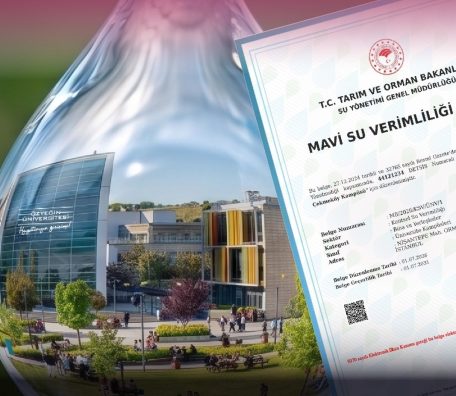
In recognition of our collective efforts, we became the first university in Türkiye this year to receive both the Blue Water Efficiency Certificate and the TS ISO 46001 Water Efficiency Management System Certification, marking two significant firsts in water management.
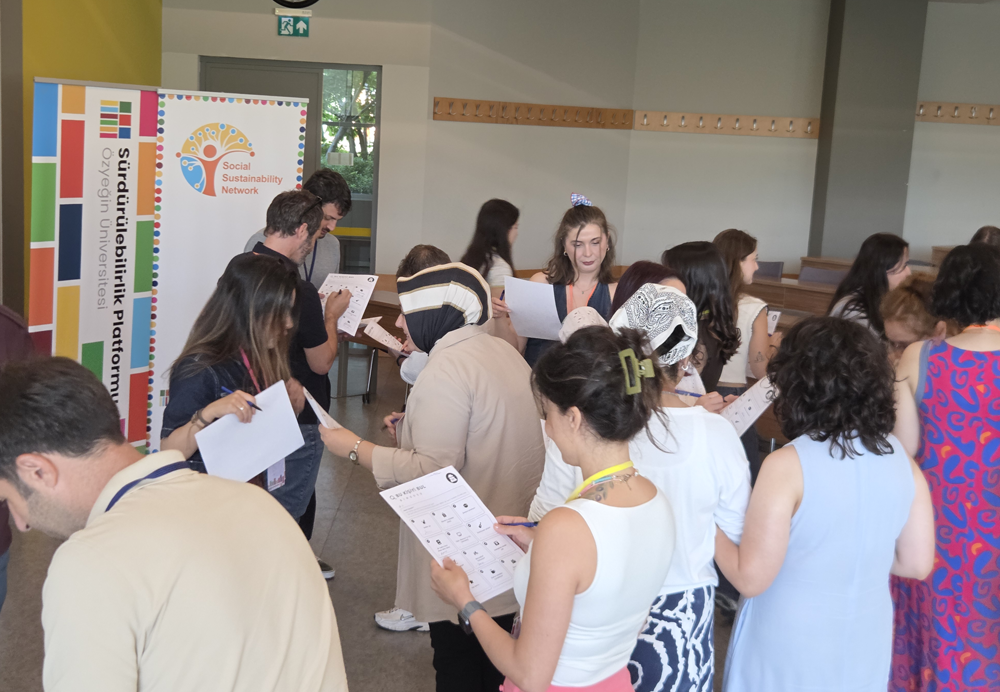
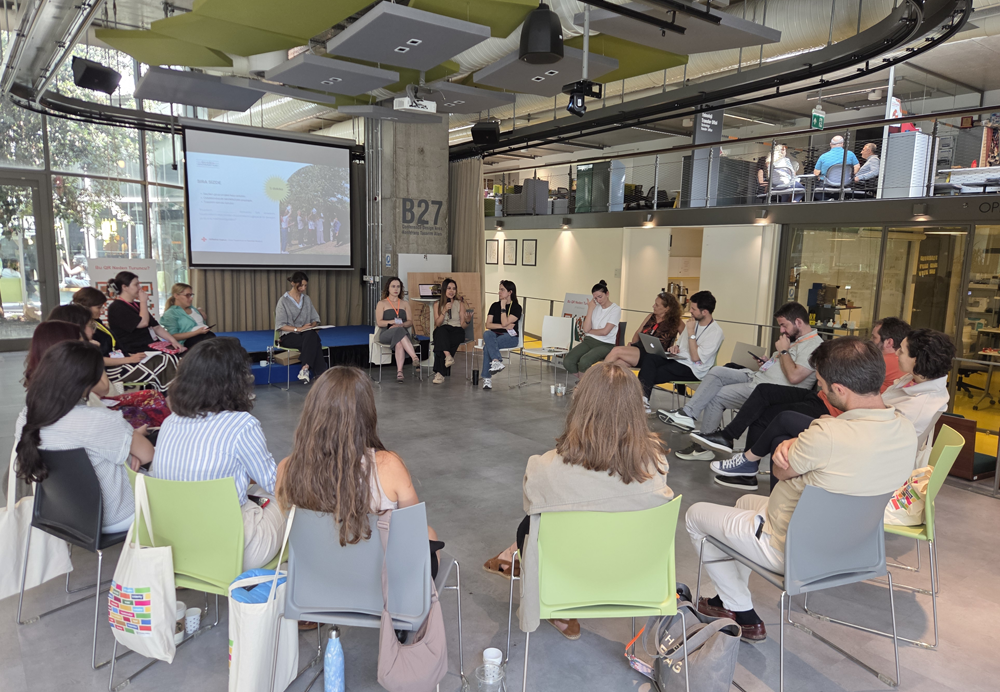
At the same time, our Sustainability Platform hosted its second Social Sustainability Summer Camp, bringing together participants from academia, the private sector, and diverse disciplines to foster exchange of knowledge and collaboration around the human dimension of sustainability.
These initiatives stand as a powerful testament to Özyeğin University’s holistic approach to sustainable development, addressing both environmental and social sustainability.
Özyeğin University Becomes Türkiye’s First University
to Receive the Blue Water Efficiency Certificate
Özyeğin University became the first university in Türkiye to receive the Blue Water Efficiency Certificate, awarded by the Ministry of Agriculture and Forestry. This achievement is an important milestone in the University’s long-standing efforts to manage water resources efficiently, effectively, and sustainably.
The impacts of climate change and growing pressure on water resources have made responsible water use a strategic priority for institutions. With their extensive facilities and diverse communities, university campuses stand out as important settings for driving this transformation forward. As the first higher education institution in Türkiye to receive the Blue Water Efficiency Certificate, Özyeğin University has reached an important milestone that sets an example for the higher education sector in sustainable water management.
Building on the Water Efficiency Mobilization led by the Ministry of Agriculture and Forestry, Özyeğin University designated the 2025–2026 academic year as the “Year of Water.” During this period, the University focused on systematically monitoring water consumption across campus, assessing its efficiency performance, and developing water conservation measures within an institutional framework. Systematic monitoring of water-use data and the identification of areas for improvement formed the foundation of the certification process.
This achievement also marks the University’s second major first in the field of water management. Özyeğin University previously became the first higher education institution in Türkiye to establish and receive certification for the ISO 46001 Water Efficiency Management System from the Turkish Standards Institution (TSE). Coordinated by the Sustainability, Safety and Quality Department in collaboration with the Technical Services Department and academic and administrative units, these efforts continue to support the ongoing monitoring and improvement of water use across campus while strengthening the University’s institutional contribution to national water-efficiency goals and efforts to combat climate change.
Setting a New Standard in Water Management:
Türkiye’s First University Certified to TS ISO 46001
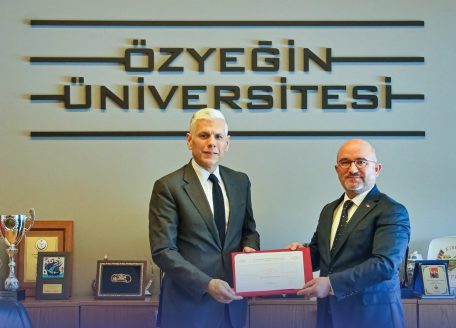
Our commitment to sustainability reached another significant milestone this year as our University became the first in Türkiye to receive the TS ISO 46001 Water Efficiency Management System Certification. This landmark achievement certifies that water resources are managed systematically, efficiently, and sustainably across our campus in accordance with internationally recognized standards, making our University the first in Türkiye to attain this distinction.
The certification is the culmination of years of dedication to sustainability and data-driven resource management. By designating the 2025–2026 academic year as the Year of Water, we launched a comprehensive initiative focused on preserving water resources and promoting their efficient use. The initiative was built on the continuous monitoring and transparent reporting of campus-wide water consumption, student-led sustainability projects, and awareness initiatives developed in partnership with stakeholders across the University and beyond.
Following the successful completion of the certification process, representatives from the Turkish Standards Institution (TSE) visited our campus to assess the University’s practices. During the visit, TSE representatives reviewed Özyeğin University’s ongoing efforts in sustainability, water efficiency, and institutional transformation, and formally presented the certification.
Our achievements in water management are part of a broader, holistic sustainability strategy that also covers energy efficiency, waste management, sustainable transportation, and biodiversity. Centered on the responsible use of natural resources, this integrated approach is designed to continuously enhance our campus’s environmental performance while serving as a scalable model for higher education institutions.
Social Sustainability Summer Camp Connects Academia and the Private Sector
The second Social Sustainability Summer Camp, hosted by the Özyeğin University Sustainability Platform, welcomed 24 participants from 11 academic institutions and nine private-sector organizations.
Held on our campus from July 27–30, 2026, the four-day program focused on the human-centered dimensions of sustainability. Participants worked together on key areas of social sustainability, including inequality, employee experience, inclusion, power dynamics, and social impact.
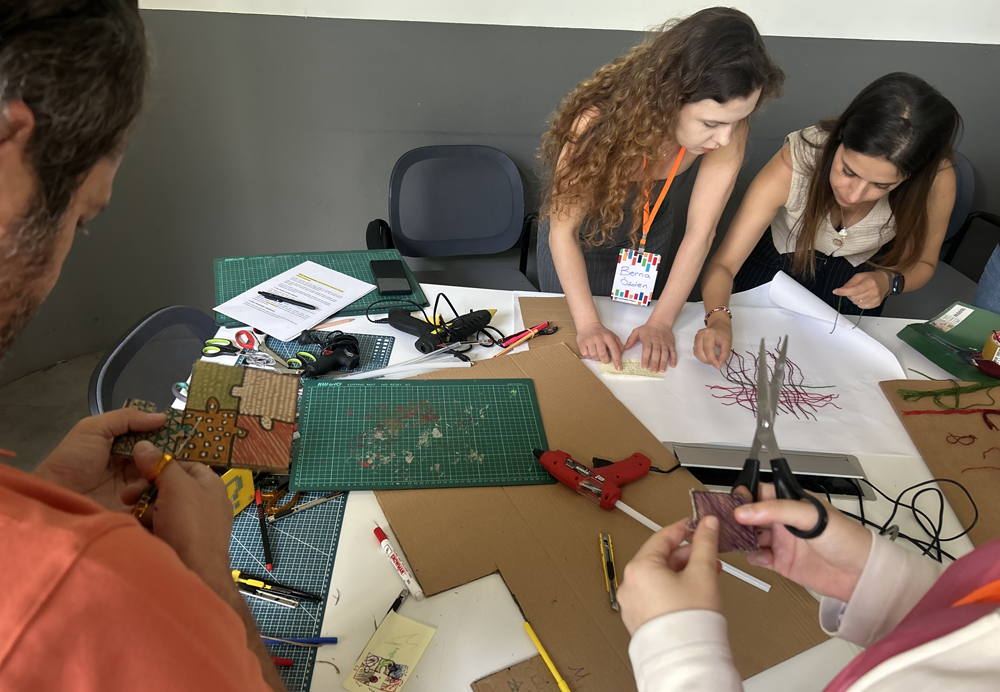
Bringing graduate students and private-sector professionals to the same table, the camp created a dynamic space for exchanging academic knowledge and real-world experience. The immersive four-day format gave participants the opportunity to focus deeply on shared challenges, gain insight into different disciplinary perspectives, and develop new avenues for collaboration.
The first day focused on the conceptual foundations of social sustainability, theory of change, and the Problem Market exercise. The second day centered on measuring and managing social impact, organizational culture, and impact communication. On the third day, participants discussed unintended consequences of impact, the opportunities presented by technology and artificial intelligence, and questions of ethics, transparency, and accountability. The camp concluded with a project workshop on creative processes and collaborative solution development.
Participants particularly valued the cross-sectoral and interdisciplinary discussions, the opportunity to translate theory into practice, and the insights gained from examining social impact from multiple perspectives. Participants in this year’s camp have also joined the Social Sustainability Network established following the inaugural camp, creating a lasting foundation for collaboration and knowledge sharing across academia, the private sector, government, and civil society through new projects and future gatherings.